
As technology has changed dramatically the way people work and live, it is also transforming the influence and role of teachers in nowadays’ world. Technology has created a new sort of virtual classrooms with no borders, which has opened access to millions of students that have not dreamt of a world-class and affordable higher education. At the same time, it has empowered a brand-new breed of teachers that are making a difference which was impossible one decade ago—they are teaching the world now.
Changes in the role of teachers
In the digital era, teachers are now facing new challenges each day in terms of students, new softwares and hardwares, their own individual needs as well as their developmental needs. Teachers’ role has already changed in several ways in the digital economy. On the one hand, nowadays, there is a high need for teachers to have various skills, such as networking skills and communication skills, which would facilitate the collaborative learning, in addition to the traditional skills of writing, speaking and reading clearly and coherently. According to Livingston (2017), teachers would teach and learn better within a collaborative environment. In this digital age of education, there is also a need for teachers to have social media communicating skills, including skills to conduct Webinars, create YouTube videos, prepare online Docs, use MOOC, create digital online library, the capability to reach out via the Internet to a wider group of people with their ideas, take and give feedbacks as well as identify ideas and trends from everywhere. From my own experience, compared with the education I took from the traditional class in China, the education in the more advanced countries have more versatile teachers, as they would incorporate various teaching methods, including videos, online Doc, online libraries, in the teaching processes.
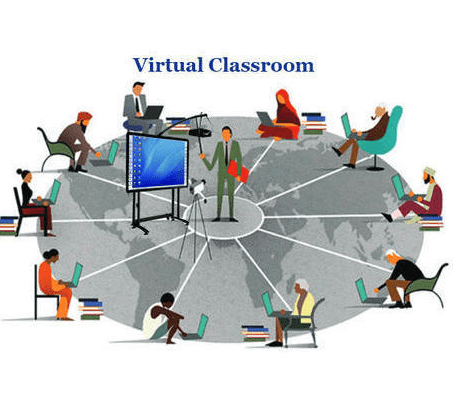
Virtual Classroom
On the other hand, the traditional way of regarding the role of teachers is as givers of knowledge. According to Watanabe, Naveed & Neittaanmäki (2017), teachers share their knowledge with the students on a certain subject, via lessons which construct on their knowledge and then move to a deeper comprehension of the subject. They are also viewed as evaluators, manager of student behaviours, and carers for the wellbeing and health of students. Today, the above expectations about teachers have been challenged. With the emergence and development of the digital technologies, the clichés including “to move from sage on the stage in order to guide on the side” emerge to show the awareness of the happening changes, emphasizing on the role of teachers as more of mentor, coach, guide and facilitator for instance. As I have also experienced that teachers are no longer in a superior position, but they have become helpers to students’ study.
In the future, the role of teacher would also change in the following ways: firstly, teachers would be inside a new virtual classroom. According to Bates (2011), teachers nowadays have a rather blank canvas in order to reimagine students’ engagement within the digital classrooms. In the future, they will have a wealth of technological tools for driving the high-touch learning. Livingston (2017) has also agreed that the video communication tools have seamlessly brought students into the live classrooms and with the help of the latest productivity apps, teachers could set up more collaborative team sessions and provide real-time feedbacks. With reference to my own learning experiences changing over the years, teachers in nowadays’ society could already bring topic alive with visual and multimedia learning. Therefore, modern classes would be more interactive and engaging compared to the traditional classrooms.
Secondly, the role of teachers would also shift to lifelong learning as a result of the ever-changing technological development. According to Watanabe, Naveed & Neittaanmäki (2017), the learning outcomes have become more and more significant. Today students require a combination of applied and foundational knowledge in order to be employable when they go into the workforce. I can expect that in the future, learning will continue and extend even at work, when people need to adapt constantly to the technology changes. Thus, staying responsive and agile need constant reskilling and learning has become a part of life, while not a certain stage of life. The changing scenario for students has given new challenges for teachers. They need to be like what a trainer to an athlete, getting prepared for students for various eventualities. Technology is ever-changing, as a result, continuous learning is crucial for teachers, because it would be for the students that they guide and advise over a much longer period of time.
References
Bates, T. (2011) Understanding Web 2.0 and Its Implications for e-Learning in Lee, M. and McCoughlin, C. (eds.) Web 2.0-Based E-Learning, Hershey NY: Information Science Reference
Livingston, K. (2017) ‘The complexity of learning and teaching: challenges for teacher education’, European Journal of Teacher Education, 40(2), pp. 141-143.
Watanabe, C., Naveed, K. & Neittaanmäki, P. (2017) ‘Co-evolution between trust in teachers and higher education toward digitally-rich learning environments’, Technology in Society, 48, pp. 70-96.
published by Lulan Liang
Hi Lulan, Thank you for sharing your thoughts. Totally agree your point claiming that Nike used digital channels to manipulate…
From your blog, I can understand that the education industry may shift from offline to online in the era of…
I am very honored to see your article so that I could understand the change in the profession of teachers…
Thank you for the post with lot of informations. As I was going through the post, the concept of homeschooling…


Let’s make something together.
 Lulan's blog
Thank you for the post with lot of informations. As I was going through the post, the concept of homeschooling which is becoming popular nowadays is another challenging scenario for the teachers. On one side, smart classrooms and virtual learning is growing, there is always an other side to it just like the flip of the coins having two sides. Approximately 48000 children in the UK are home schooled as per the year 2016-2017 and this picture is still rising. Another case is that nowadays most of the parents are educated and so they become teachers for their own children. They ensure that children are ensured with a healthy ambience without having the fear of being bullied at school. One of the big reasons behind is a stress free atmosphere and free of exam pressures and because of this positivity, more students are getting enrolled as well.
For more informations
https://www.theguardian.com/education/2018/nov/03/get-to-be-free-rise-in-home-schooling
https://www.telegraph.co.uk/news/2019/10/14/homeschooling-rise-parents-teach-children-avoid-prosecution/
LikeLiked by 1 person
I am very honored to see your article so that I could understand the change in the profession of teachers in the age of data. First of all, I strongly agree with you. The widespread use of data and networks has increased the ways teachers spread knowledge, and these ways have improved teaching efficiency compared to traditional teaching methods. Virtual classroom is a good example mentioned in your article. The main function of the initial virtual classroom is that teachers upload various learning electronic files and lectures for students to learn through the network. This method is simple in function and single in form and lacks the interaction between teachers and students. But the advent of new technologies has made interactive virtual classrooms possible. The network video mode allows teachers and students to have face-to-face communication in different places which simulating some functions of a realistic teaching classroom. So virtual classrooms must be more widely, more flexible and smarter in universities and corporate universities.
LikeLiked by 1 person
From your blog, I can understand that the education industry may shift from offline to online in the era of digital economy. With advanced technology, education will no longer be restricted by regions and will be highly interactive. The view that teachers will change from managers to helpers is controversial and not specific enough, and the author has not provided specific examples to support his view, so teachers cannot change from managers to helpers because of technological progress. I think we should discuss this in two aspects, one is the which organization(eg, primary school or cram school) teachers belong to and the age groups of the students. The changes of teachers in the future are not very clear and thorough, and the author mentioned the virtual classroom twice, so that I did not know what it was after reading it.
LikeLiked by 1 person